How to identify a white-throated sparrow
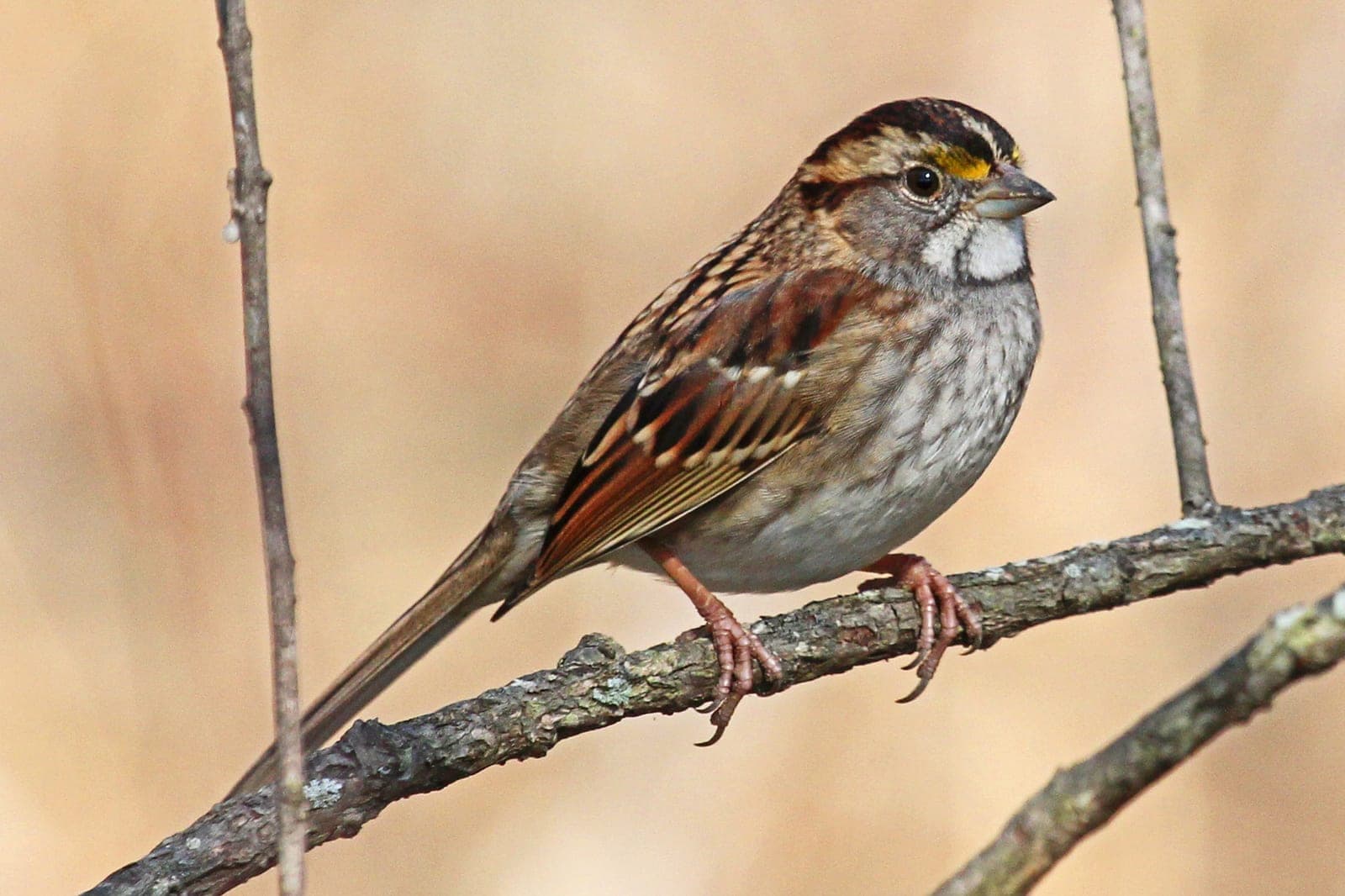
This is a chunky, fairly large sparrow with a plain gray breast, a rusty-brown back streaked with black and a boldly striped head. The throat is a crisp white patch outlined in dark gray, and a small yellow spot sits between the eye and the bill, an area birders call the lores. White-striped adults have black-and-white crown stripes; tan-striped adults have buff-and-brown stripes, a duller throat and a faintly streaked breast. Young birds in their first winter look much like tan-striped adults. The bill is gray, and the tail is fairly long. Males and females look alike.
- White throat patch sharply outlined against a gray breast
- Yellow spot between the eye and the bill
- Striped crown in black and white, or tan and brown
- Gray bill, not pink
- Scratches in leaf litter with a quick two-footed backward hop
Look-alikes
White-crowned Sparrow
White-crowned Sparrows have a pink, orange or yellowish bill, no yellow spot before the eye and no sharply outlined white throat; the gray face blends into the throat. They stand more upright and favor more open brushy country.
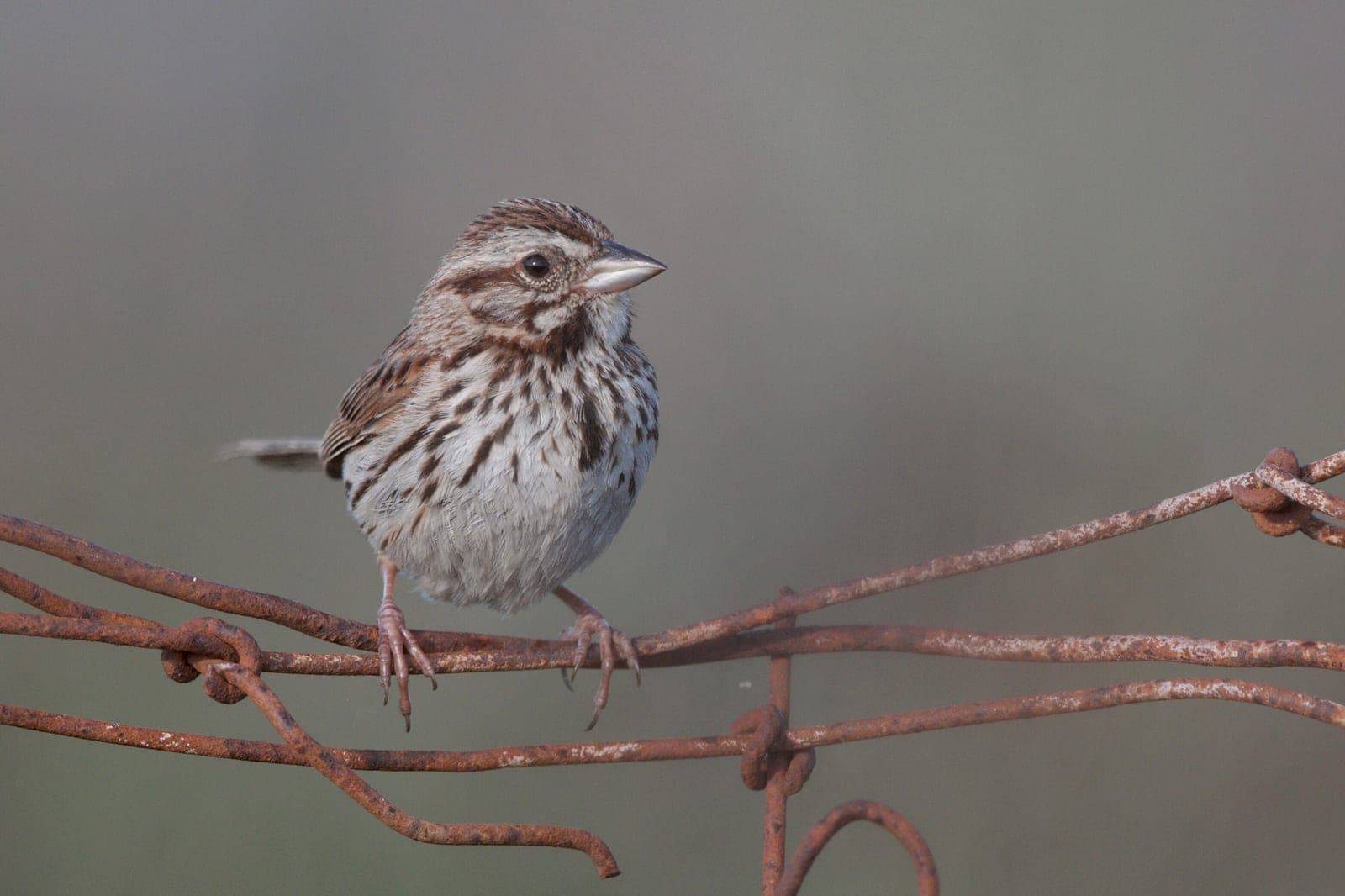
Song Sparrow
Song Sparrows have heavy brown streaks on the breast and a striped brown-and-gray face, without the crisp white throat or the yellow spot by the bill.
House Sparrow
Male House Sparrows have a black bib instead of a white throat and a plain gray crown without stripes, and females have a plain face. House Sparrows stick to buildings, while white-throats stick to thickets.
Range & habitat
White-throated sparrows breed across the boreal and mixed forests of Canada, from the Yukon and northeastern British Columbia east to Newfoundland, and south into the northern Great Lakes states, New York and northern New England. They winter across the eastern half of the United States, from southern New England and the lower Great Lakes to the Gulf Coast, south into northeastern Mexico, with smaller numbers scattered through the West and along the Pacific Coast. A few stay year-round in Atlantic Canada.
On the breeding grounds they pick openings and edges in conifer and mixed forest, such as bog margins, burns, clearings, pond shores, roadsides and young regrowth, wherever dense shrubs grow under or beside the trees. In migration and winter they use thickets, woodland undergrowth, overgrown fields, hedgerows, parks and well-planted suburbs, rarely straying far from cover.
Through the seasons
Spring
Wintering birds begin singing in late winter, and the flocks head north in April and early May; in Tennessee most are gone by mid-May. Migrants crowd parks and woodlots around the Great Lakes and the Northeast, filling them with whistled song.
Summer
Pairs nest on the ground in clearings and edges of northern forests. Males sing from treetops through the day, and both parents carry insects to the young. Breeding birds are scarce south of Canada and the northernmost states.
Fall
Migrating mostly at night, white-throats arrive in the southern states by early October and keep coming through November. Many fall birds are dull young or tan-striped adults.
Winter
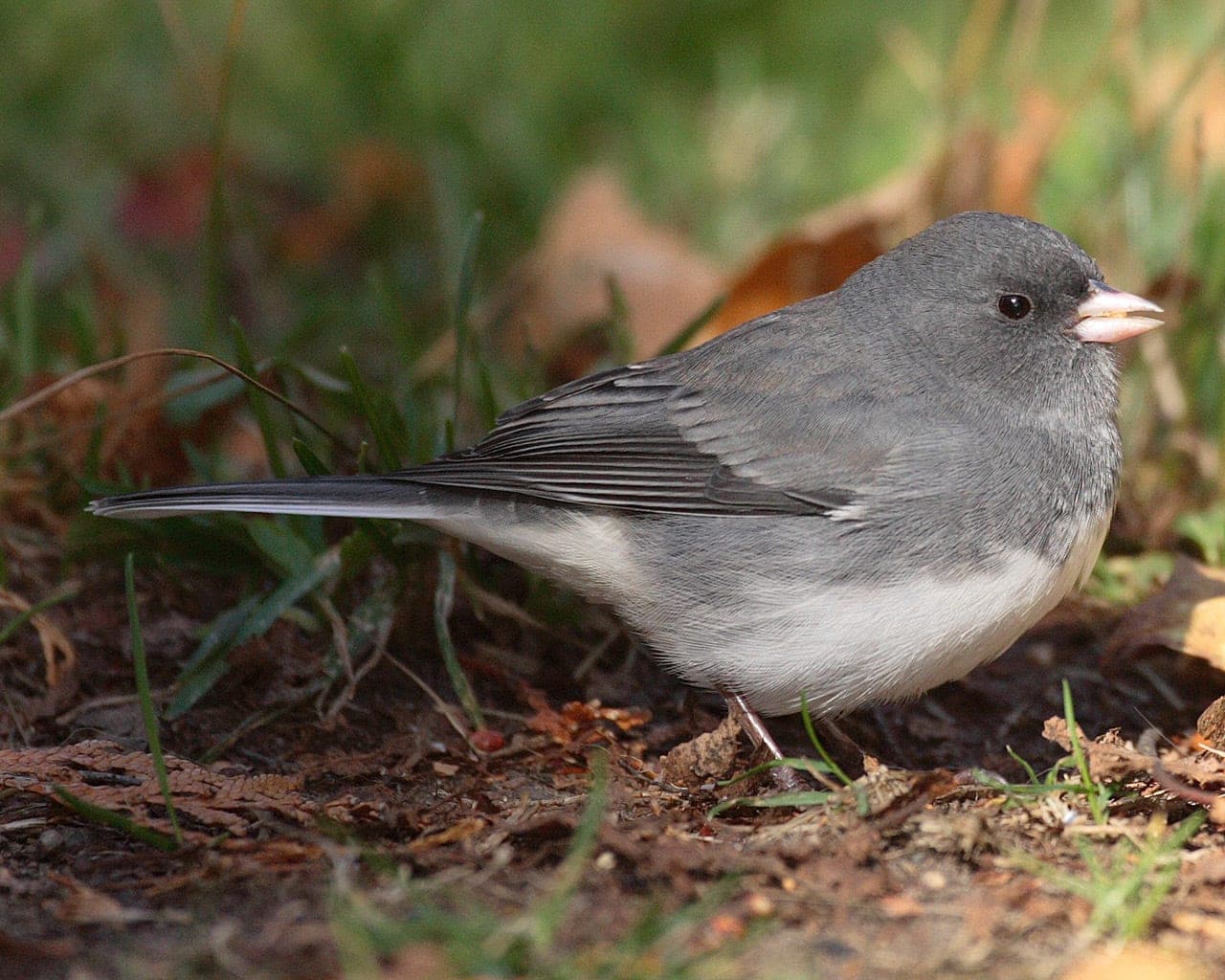
Flocks, often mixed with juncos, scratch for seeds under feeders and in thickets across the East and South, giving sharp call notes when disturbed. On mild late-winter days, some start to sing.
How to find and attract white-throated sparrows
In winter, look low: white-throats feed on the ground along the edges of shrubs and dart back into cover when disturbed. In spring and summer, listen for the slow, clear whistled song, which many birders can imitate well enough to draw a male into view.
- Scatter white millet or mixed seed on the ground or a low tray near shrubs; they rarely use hanging feeders.
- Leave fallen leaves under shrubs and build a brush pile, since white-throats feed by kicking back through leaf litter.
- Listen in thickets for the thin, lisping 'tseep' call and a sharper 'chink' of alarm in fall and winter.
- Plant native fruiting shrubs such as dogwood, viburnum and sumac; white-throats eat many berries in fall.
- In June, walk bog edges, burns and clearings in northern forests at dawn to hear singing males.
Diet & life cycle
What it eats
In summer, white-throats eat mostly insects and other small animals, including ants, wasps, beetles, flies, caterpillars, damselflies, spiders, millipedes and snails, and they feed their nestlings mainly insects. In fall and winter they switch to weed and grass seeds and plenty of berries. At feeders, white millet is a favorite. They find most food on the ground by scratching through leaf litter with both feet.
Life cycle
Pairs nearly always combine one white-striped and one tan-striped bird. The two forms are fixed by a large rearranged section of one chromosome and come with different behavior: white-striped birds of both sexes are more aggressive and sing more, while tan-striped birds put more effort into feeding the young. The female builds a cup of grass, twigs and pine needles on or near the ground, hidden under shrubs or ferns, and lays usually four or five pale blue or greenish eggs marked with reddish brown. She incubates them for about 11 to 14 days, and the young leave the nest after only 8 or 9 days, cared for by their parents for at least two more weeks. Pairs raise one or two broods.
Oldest on record
The oldest white-throated sparrow in the USGS Bird Banding Laboratory longevity table was at least 14 years and 11 months old. It was banded in Alberta in September 1995, in its first year of life, and recaptured and released there in May 2010.
SourceAttracting & watching
White-throats are among the easiest winter sparrows to attract in the East. Scatter white millet, cracked corn or sunflower chips on the ground or a low platform near shrubs or a brush pile, and keep a ground-level birdbath open. Native fruiting shrubs and unraked leaf litter give them both food and cover. Because they nest only in northern forests, most yards host them as seasonal guests from about October to May.
Conservation
Least Concern (IUCN). White-throated sparrows still number well over 100 million by Audubon's estimate, but the Breeding Bird Survey shows a decline of about 0.7 percent a year from 1966 to 2019, roughly a third of the population, with steeper losses in the U.S. part of the breeding range. Researchers have also tracked the song itself changing: a version ending in doubled notes instead of triplets started in western Canada and spread east across much of the country. The species is protected under the Migratory Bird Treaty Act.