How to identify a house sparrow
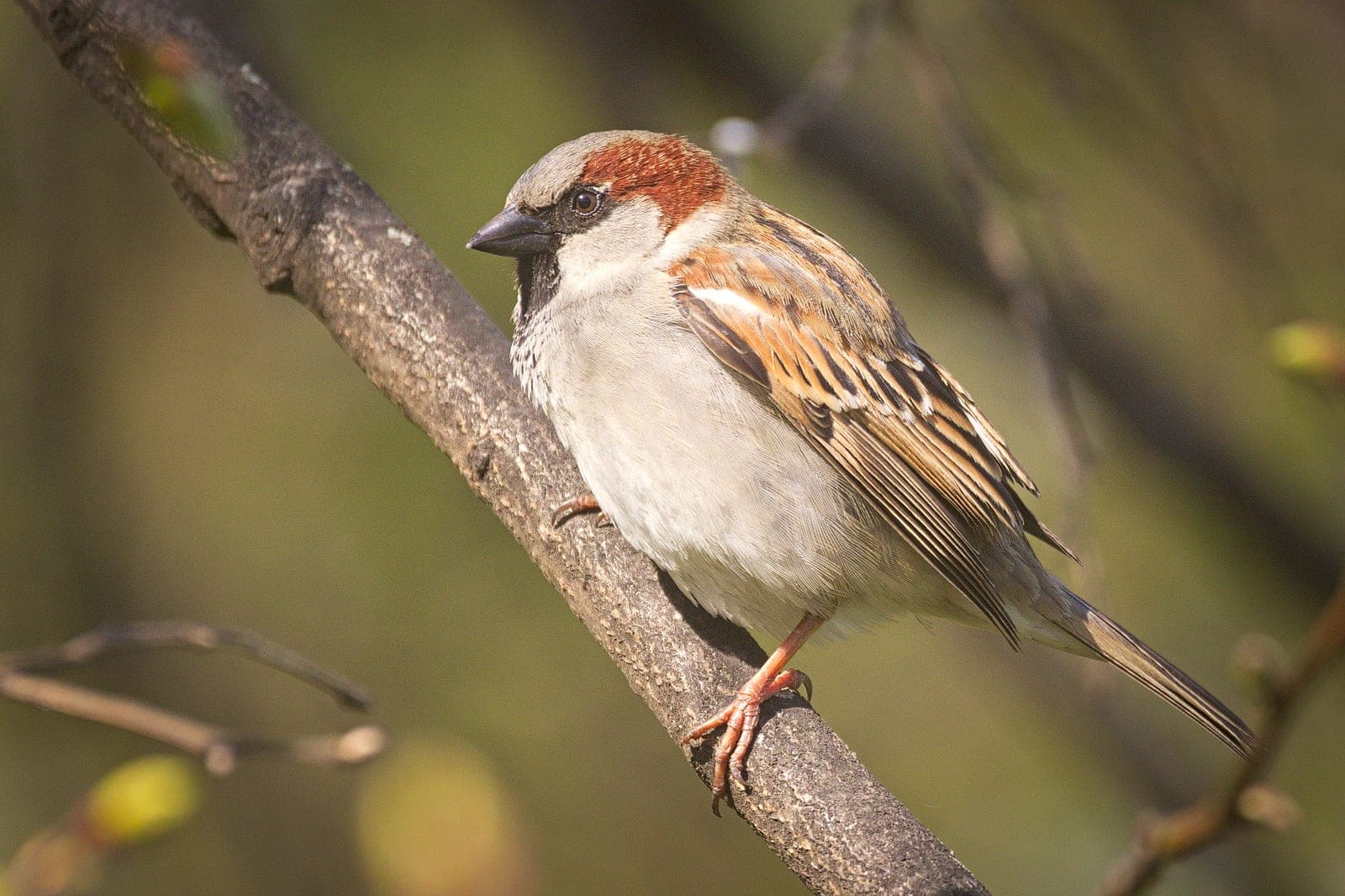
Male house sparrows have a gray crown, a chestnut band running from behind the eye to the nape, pale gray cheeks, a black bib and, in breeding season, a black bill. A single bold white bar crosses the shoulder of the wing. In fall, fresh feathers have pale tips that partly hide the bib and dull the colors; the tips wear away by spring and the male looks sharper without molting. Females are plain brown and buff, with a broad buffy stripe behind the eye, a back striped in brown, black and buff, an unstreaked gray-buff breast and a yellowish bill. Both sexes are chunky and short-legged, with a thick, conical bill and a short tail, and they hop rather than walk.
- Male: gray crown, chestnut nape and a black bib
- Female: plain unstreaked breast and a buff stripe behind the eye
- Thick conical bill on a chunky, short-tailed body
- One bold white bar on the shoulder of the wing
- Loud, monotonous 'cheep' calls from buildings and signs
Look-alikes
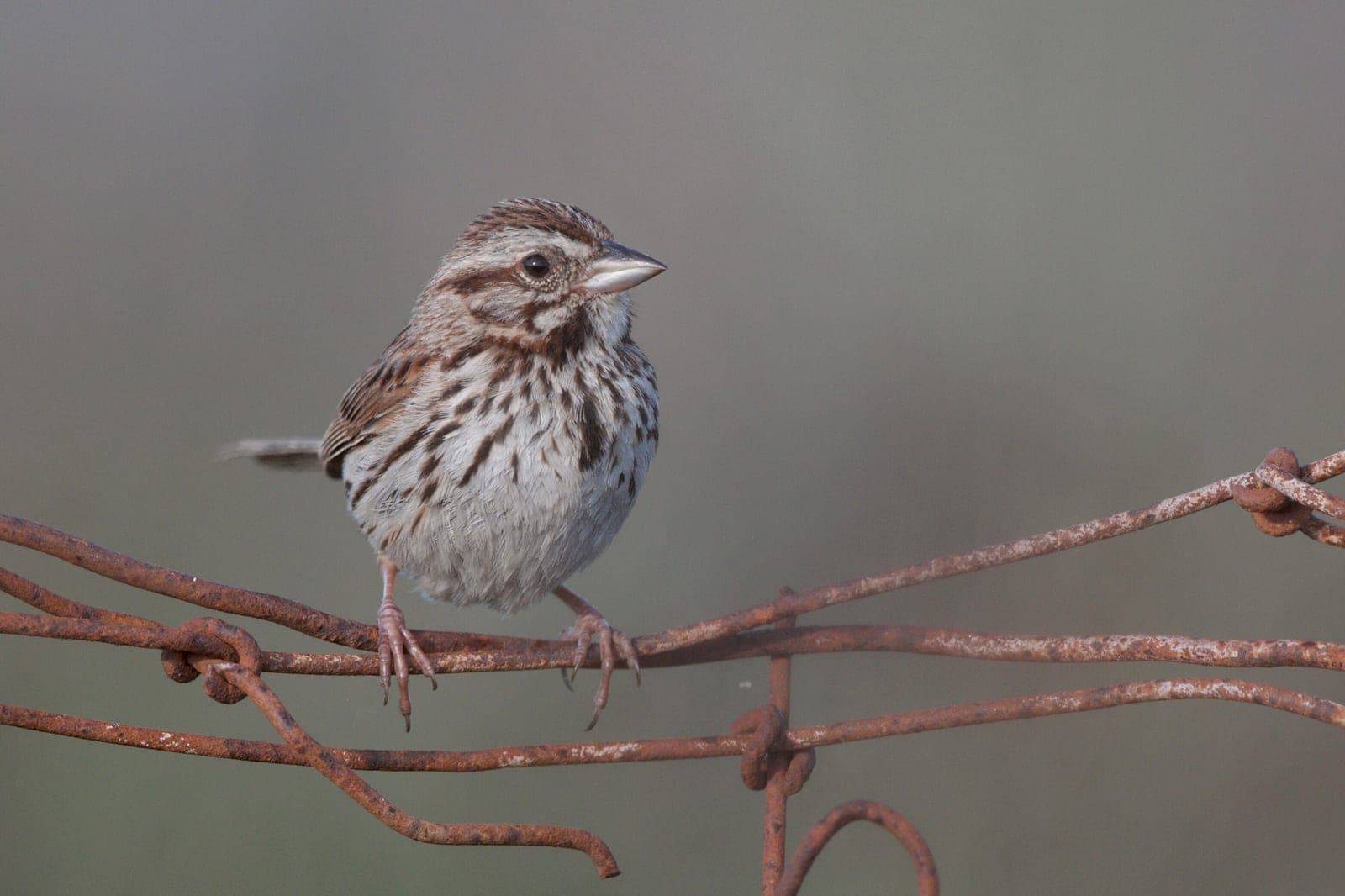
Song Sparrow
Song Sparrows are heavily streaked below, with streaks that join in a central breast spot, a striped face and a long, rounded tail. House Sparrows of both sexes have a clean, unstreaked breast, and males wear a black bib.
Full comparison →House Finch
Female House Finches have blurry streaks down the breast and a plain face. Female House Sparrows have a clean breast and a clear buff eyebrow. Male House Finches show red on the head and breast instead of a black bib.
Eurasian Tree Sparrow
Another introduced Old World sparrow, found mainly around St. Louis and nearby parts of Illinois and Iowa. Both sexes look like a small male House Sparrow with an all-chestnut crown and a black spot on a white cheek.
Range & habitat
House sparrows are native to most of Europe, North Africa and much of Asia, and people have carried them to the Americas, southern Africa, Australia, New Zealand and many islands. In North America, eight pairs were released in Brooklyn, New York, in 1851 and failed; further releases in 1852 and 1853 took hold, and others followed in cities such as San Francisco and Salt Lake City in the early 1870s. By about 1910 they nested from coast to coast. Today they live year-round from southern Canada through the United States and Mexico into Central America, almost always near people.
In North America the house sparrow lives almost nowhere without people. Cities, towns, farmyards, feedlots, grain elevators, shopping centers and fast-food parking lots are prime habitat, and a pair can turn up at a lone ranch house or gas station in desert or forest. It nests in any hole or crevice it can find: gaps in buildings, signs, streetlights, rain gutters, dense vines and nest boxes meant for native birds.
Through the seasons
Spring
Males claim nest holes and court females by drooping their wings, raising their tails, puffing out their bibs and chirping. As pale feather tips wear off, the full black bib shows. Nesting starts in March, often in boxes put up for bluebirds, swallows or martins.
Summer
Pairs raise two or more broods through August, and families gather in noisy groups. Watch for dust baths, with sparrows scratching shallow bowls in dry soil and flicking dust through their feathers, and for birds picking bugs off car grilles.
Fall
Flocks of adults and young work farm fields, weedy lots and livestock pens for waste grain and seeds. Fresh plumage gives males a duller, scaly look until spring.
Winter
House sparrows do not migrate. They roost together in dense shrubs, ivy and building nooks, and crowd feeders offering millet, cracked corn and bread.
How to find house sparrows and manage them at feeders and nest boxes
Finding house sparrows is easy: walk any city block, farmyard or strip mall and listen for steady chirping. The real question for most backyard birders is how to keep this introduced species from taking over feeders and nest boxes meant for native birds.
- Look and listen around buildings, signs and streetlights, where males chirp from crevices and nest in gaps.
- Watch for groups dust bathing in dry soil and bare garden beds on warm days.
- To feed native birds instead, skip millet, cracked corn and milo, and offer safflower, nyjer or nectar in feeders with short perches.
- Place bluebird and swallow boxes in open country, away from barns, houses and feedlots where sparrows gather.
- Keep boxes plugged until native migrants return in spring, so year-round sparrows cannot claim them first.
- Check boxes weekly. House sparrow nesting material may legally be removed, but learn the nests well first: disturbing a native bird's nest is illegal.
Diet & life cycle
What it eats
House sparrows are mainly seed eaters, living on waste grain, livestock feed and weed and grass seeds, and in cities on bread, crumbs and other scraps. In summer they add insects such as beetles, caterpillars, flies and aphids, and they feed their nestlings mostly insects for the first couple of weeks. They forage by hopping on the ground, clinging to weed stalks, picking insects off car fronts and working outdoor cafe tables.
Life cycle
House sparrows often nest in loose colonies, each pair defending only the space around its hole. Both sexes stuff the cavity with grass, weeds, feathers, string and trash; in the open they build a messy ball with a side entrance. The female usually lays four or five whitish to greenish eggs speckled with brown and gray, and incubation takes about 11 to 14 days, mostly by the female. The young leave the nest at about two weeks, and pairs commonly raise two or three broods between March and August.
Oldest on record
The oldest house sparrow in the USGS Bird Banding Laboratory longevity table was a female at least 15 years and 9 months old. She was banded in Texas in July 1989 and found dead there in March 2004.
SourceAttracting & watching
House sparrows will come to almost any feeder, so most advice aims at limiting them: they love millet, cracked corn, milo and bread, and cutting those out in favor of safflower, nyjer and nectar tips a yard toward native birds. They are still worth watching, from dust baths and communal roosts to the male's bowing display. If you put up nest boxes, monitor them closely: a house sparrow taking over a box may destroy eggs and kill bluebird or swallow nestlings, and even adults.
Conservation
Least Concern (IUCN); introduced in North America. Worldwide the house sparrow is still hugely abundant, but it has declined in many places. The North American Breeding Bird Survey shows a drop of nearly 3 percent a year from 1966 to 2019, roughly an 80 percent loss over that span, and Project FeederWatch data show the steepest recent declines in cities. Because it is an introduced species, the house sparrow is not protected under the Migratory Bird Treaty Act, although state and local rules can still apply.