How to identify a red-bellied woodpecker
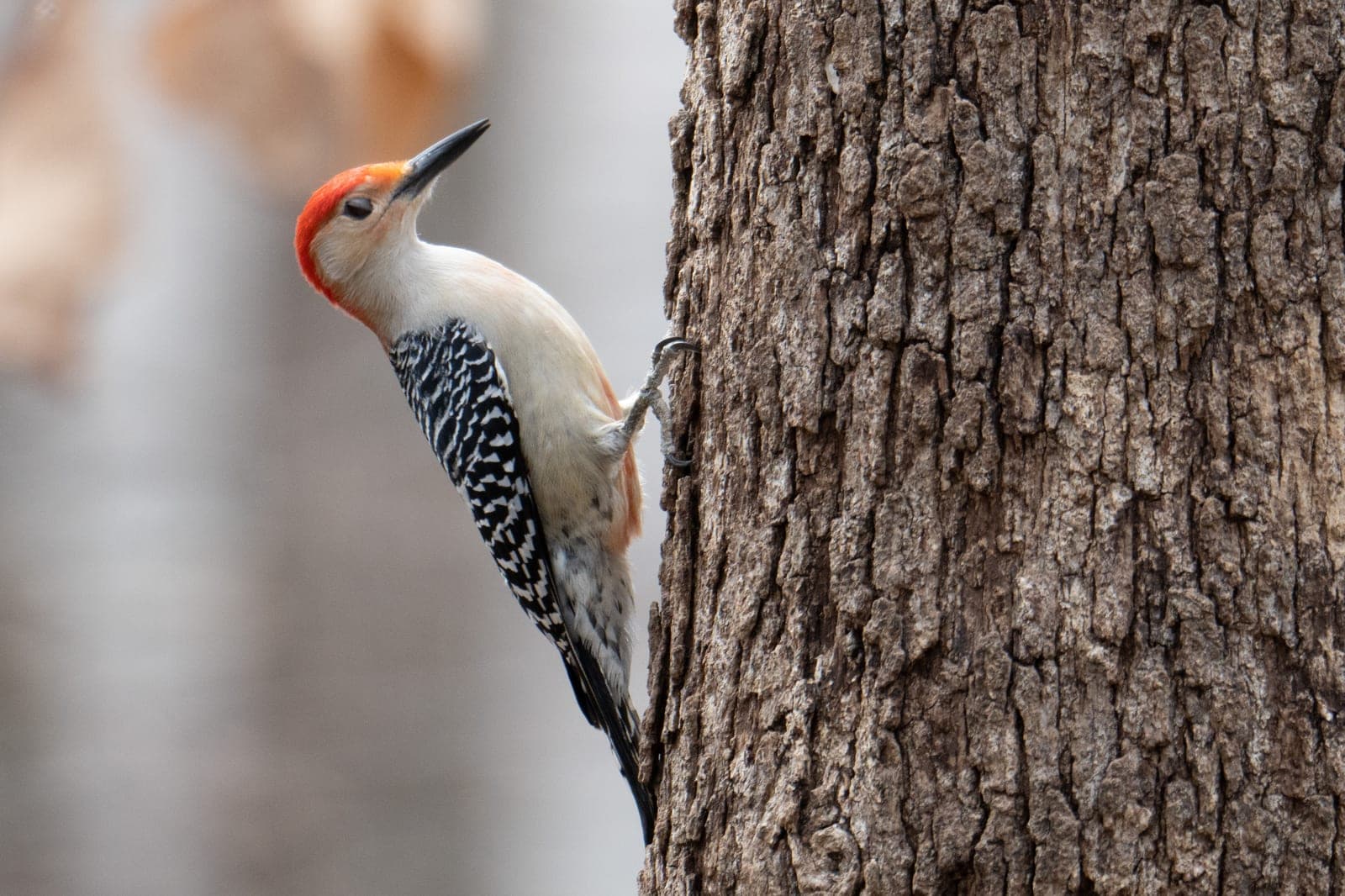
Red-bellieds are medium-sized woodpeckers with a plain, pale gray-buff face and underparts and a back closely barred in black and white, a pattern birders often compare to a zebra's stripes. Males are red from the base of the bill over the crown to the nape. Females have a gray crown, with red only on the nape and in a small patch just above the bill. The pinkish-red wash on the lower belly that gives the bird its name is pale and usually pressed against the trunk, out of sight. In flight, look for a white rump and a small white patch near each wingtip. The common call is a rolling, trilled 'churr' or 'kwirr' that carries through Eastern woods.
- Black-and-white barred 'zebra' back
- Red from bill to nape on males; red nape only on females
- Plain, pale gray-buff face and underparts
- White rump and small white wingtip patches in flight
- Rolling 'churr' call
Look-alikes
Red-headed Woodpecker
The red-headed woodpecker has a solid crimson head and throat, a glossy black back and big white wing patches that make it look half white in flight. A red-bellied has a barred back, a pale face and red only on the top and back of the head.
Golden-fronted Woodpecker
In much of Texas and southwestern Oklahoma, the golden-fronted woodpecker takes over, with a yellow-orange nape and a yellow patch above the bill. The two species meet in a narrow band from central Texas to southwestern Oklahoma, where hybrids with mixed head colors have been recorded.
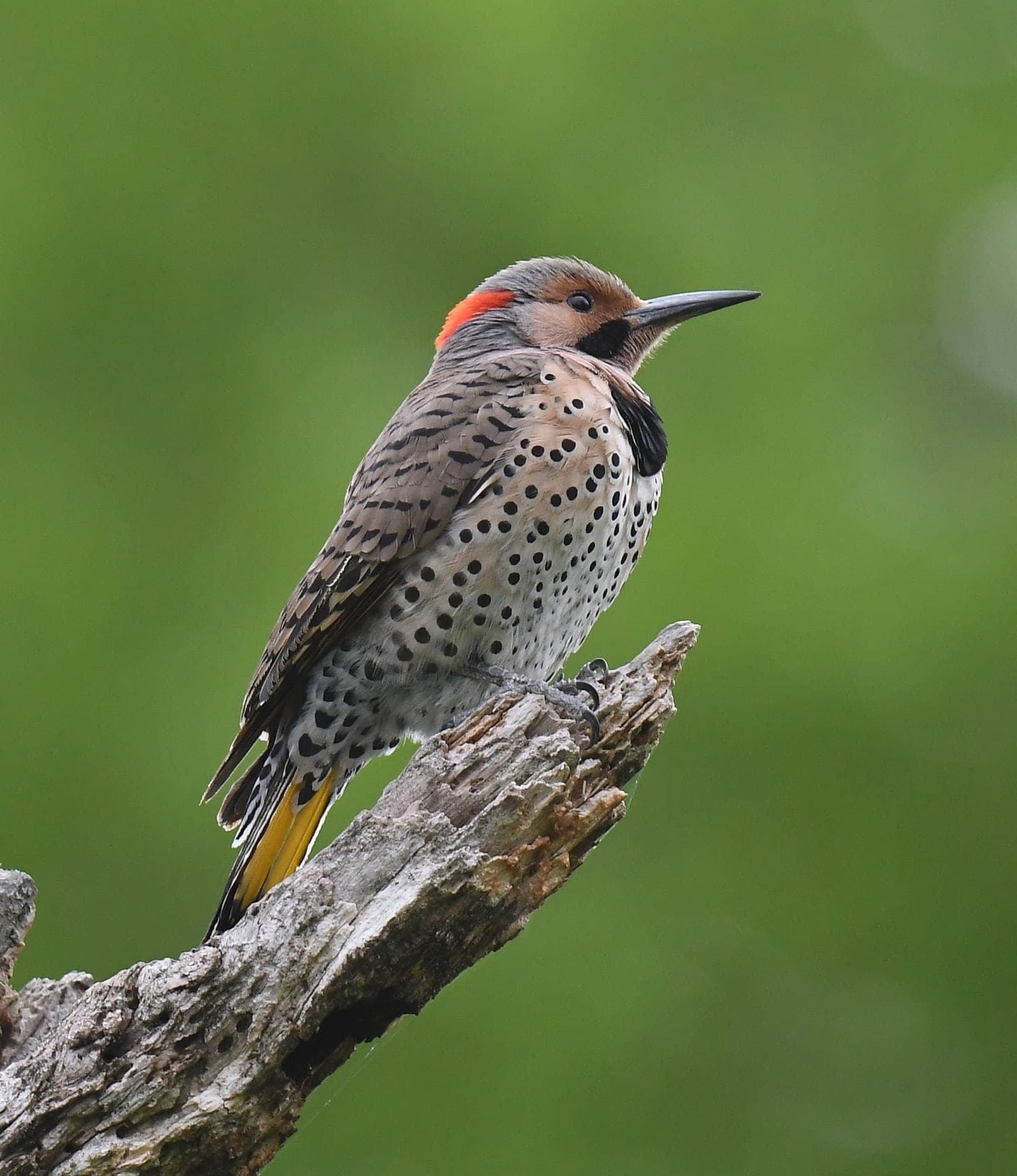
Northern Flicker
Flickers are bigger and brown rather than gray, with a black crescent on the chest, round black spots below and yellow or salmon-red under the wings and tail. Both flash a white rump when they fly off, which causes most of the mix-ups.
Range & habitat
Red-bellied woodpeckers live year-round across the eastern and central United States, from Florida and the Gulf Coast north to the Great Lakes and New England and west to the eastern Great Plains, Oklahoma and central Texas. The northern edge of the range has moved steadily north over the past several decades, with breeding birds now established in places such as southern Canada, Minnesota and northern New England. Most birds stay put through winter, though some in the north may move south in harsh years.
They are most common in deciduous forest, especially along rivers and in swamps, and also use mixed woods, though they are scarcer in pure pine stands. Forest edges, clearings, woodlots in farm country, orchards, city parks and older suburbs with large shade trees all suit them. Dead and decaying wood matters: studies have found red-bellieds spending a large share of their foraging time on dead or dying trees, and they nest in them as well.
Through the seasons
Spring
Males drum and call to advertise territories, and a male often starts several holes for his mate to choose from. Nesting usually begins in April or May, and pairs are territorial while they nest.
Summer
Young leave the nest at about 24 to 27 days and may be fed by their parents for six weeks or more. Northern pairs raise one brood; southern pairs can raise two or even three.
Fall
Acorns, other nuts, fruit and seeds become a big part of the diet. Red-bellieds tuck spare food into bark crevices to eat later, and you may see one carry a peanut or sunflower seed from a feeder to a favorite tree.
Winter
Most stay on territory all winter and become regulars at suet and seed feeders. With the leaves down, their barred backs and red heads are easy to pick out, and their rolling calls are a frequent winter sound in Eastern woods.
How to find and attract red-bellied woodpeckers
Across the East, a red-bellied is often the first woodpecker you hear on a winter morning. Follow the rolling call to a big tree, or put out suet and wait for one to come to you.
- Learn the rolling 'churr' or 'kwirr' call and the series of 'chuck-chuck-chuck' notes that drop in pitch.
- Offer suet, shelled peanuts and black-oil sunflower seed; red-bellieds take all three and often fly off with food to store.
- Plant oaks, hickories and fruiting native shrubs, since nuts and berries make up much of the fall and winter diet.
- Leave dead trees, stumps and dead limbs where they are safe; red-bellieds dig their nests in decaying wood.
- Try a woodpecker nest box in a wooded yard; red-bellieds sometimes use boxes as well as old woodpecker holes.
- Check river-bottom forests and wooded swamps, where they are most common away from towns.
Diet & life cycle
What it eats
Red-bellieds are true omnivores. They search trunks and big limbs for beetles, ants, caterpillars and other insects, and their tongue, barbed and sticky at the tip, can reach about 2 inches beyond the bill to pull prey from crevices. In some seasons, plant food such as acorns, other nuts, fruit and seeds can make up more than half the diet. They occasionally eat tree frogs, small birds' eggs, sap and even small fish, and they are among the birds that eat the larvae of the invasive emerald ash borer.
Life cycle
In spring the male begins excavating, sometimes starting several holes, and the female picks the one to finish. Nests are dug in dead trees, stumps, utility poles or fence posts, usually below 50 feet but sometimes far higher. The female lays two to six white eggs, and both parents incubate for about 12 days, the male covering the night. Young fledge at about 24 to 27 days and stay in the area around their birthplace for months while they learn to forage.
Oldest on record
The oldest red-bellied woodpecker in the USGS Bird Banding Laboratory longevity list was a male at least 12 years and 3 months old. He was banded in Georgia in 2003, and his federal band was read on the living bird in 2012.
SourceAttracting & watching
Suet, shelled peanuts and sunflower seed bring red-bellieds to almost any Eastern yard with mature trees nearby, and they also eat fruit. A platform or tray feeder makes it easy for them to grab food and carry it off to cache. A birdbath helps in summer. Leaving dead limbs and snags in place gives them nesting and feeding sites, and a nest box may tempt a pair in a wooded yard.
Conservation
Least Concern (IUCN). Red-bellieds are one of the clear success stories among woodpeckers. Partners in Flight estimates about 16 million birds, and the Breeding Bird Survey shows an increase of about 0.8 percent a year from 1966 to 2019 as the range spread north. European starlings are their main nest competitors and, in some areas, take over as many as half of red-bellied nest holes.