How to identify a carolina wren
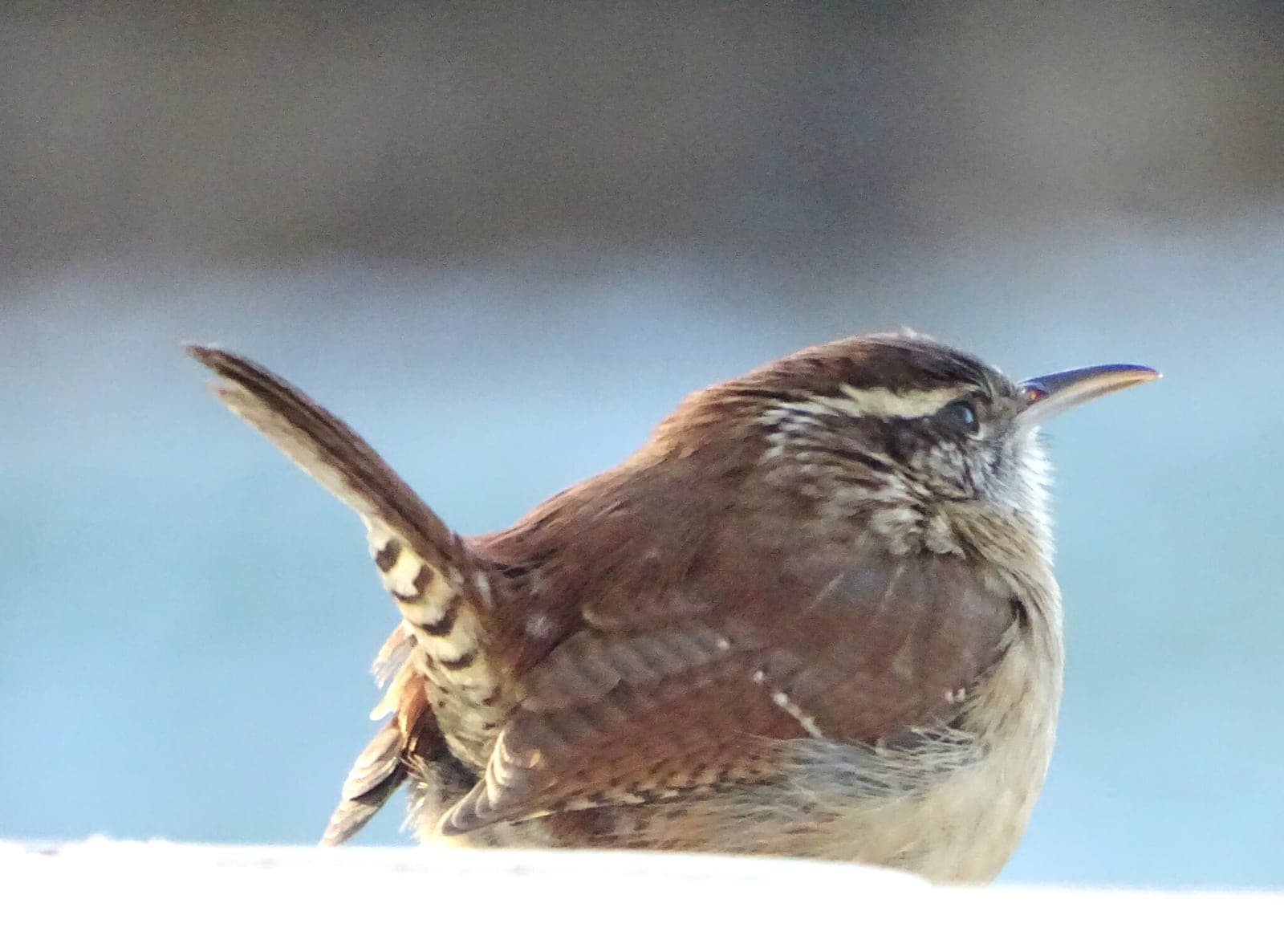
Carolina Wrens are round, short-necked birds, bigger than a House Wren and the second-largest wren in the United States after the Cactus Wren. The upperparts are a warm reddish brown, the underparts a rich buff or cinnamon, and the throat whitish. A long, bright white eyebrow, edged below by a dark line through the eye, is the bird's signature. The wings and long tail are finely barred with black, and the tail is often cocked up over the back. The bill is long, slim and slightly curved. Males and females look alike.
- Long, bold white eyebrow over a dark eye line
- Rich reddish-brown back and warm buff underparts
- Long tail, finely barred and often cocked upward
- Long, slightly down-curved bill
- Loud 'teakettle-teakettle-teakettle' song all year
Look-alikes
House Wren
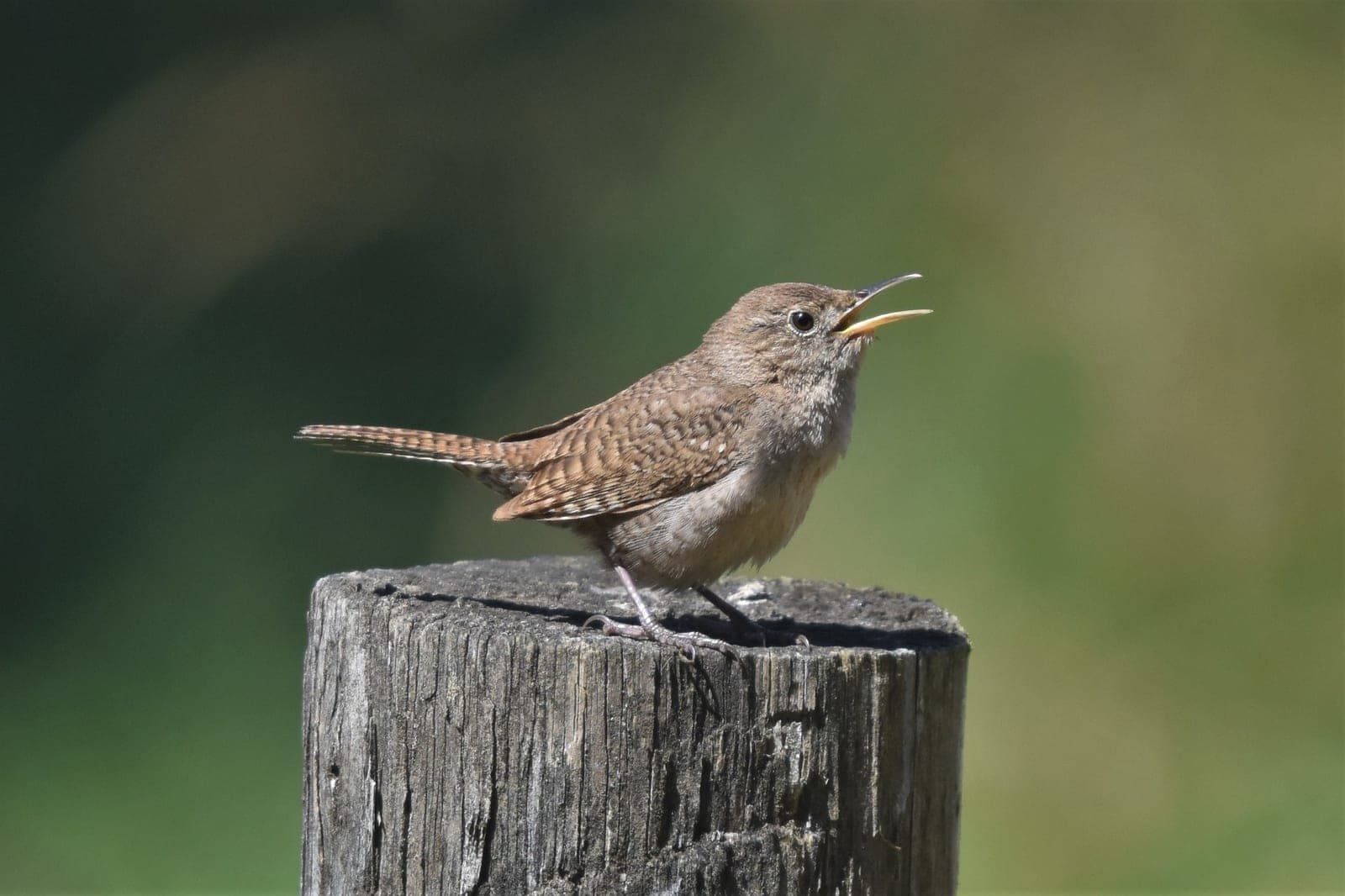
House Wrens are smaller and plainer gray-brown, with at most a faint eyebrow and no cinnamon underparts. They sing a long, bubbling jumble rather than repeated three-part phrases, and in most of the East they leave for the South in fall.
Bewick's Wren
Bewick's Wrens are grayer brown above and whiter below, with a long white eyebrow and a long tail edged with white spots at the corners. Carolina Wrens are richer rust and buff and have no white in the tail.
Winter Wren
Winter Wrens are tiny, dark brown birds with a very short, stubby tail and only a faint eyebrow. They creep through brush piles and stream banks in winter and are far less bold than a Carolina Wren.
Range & habitat
Carolina Wrens live year-round across the eastern United States, from the Gulf Coast and Florida north to the southern Great Lakes and New England, and west to eastern Nebraska, Kansas, Oklahoma and Texas. They also reach extreme southern Ontario and northeastern Mexico. The northern edge moves with the weather: a run of mild winters lets them spread north into places such as Maine and southern Quebec, and a severe winter knocks them back south.
Carolina Wrens live close to the ground in thick cover: brushy forest understory, tangles of vines, overgrown fence rows, thickets along streams and the edges of swamps. They have adapted well to people and are common in suburban yards and gardens with dense shrubs, brush piles, woodpiles and outbuildings, where they find both insects and sheltered nooks for nesting and roosting.
Through the seasons
Spring
Nesting starts early, as soon as late February in Texas and by late April in the Midwest. Males sing almost constantly, and pairs build in any sheltered nook, from tree hollows and upturned roots to mailboxes and sheds.
Summer
Pairs raise a second brood, and in the South often a third. Families of short-tailed fledglings scold from the shrubs, and young birds begin to disperse to find territories of their own.
Fall
Some young wrens wander north of the usual range in fall. Resident pairs stay together on their territories and keep singing, and fruit and seeds start to supplement the insect diet.
Winter
Carolina Wrens do not migrate, so long stretches of ice and snow can kill many at the northern edge. Survivors visit feeders for suet and peanuts and roost in sheltered nooks out of the wind.
How to find and attract Carolina Wrens
You will usually hear a Carolina Wren before you see it. Track down the loud 'teakettle' song or a harsh, rattling scold, then watch low tangles and brush piles for a rusty bird with its tail cocked.
- Offer suet and shelled peanuts, especially in winter, at feeders near shrubs or a brush pile.
- Build a brush pile or leave a tangled corner of the yard; wrens forage and shelter in dense, low cover.
- Leave fallen leaves under shrubs, where wrens flip through the litter for insects and spiders.
- Put up a nest box or leave sheltered nooks in sheds and porches; Carolina Wrens nest in all kinds of cavities.
- Check mailboxes, cans and stored gear in sheds before using them in spring, since wrens may have moved in.
- Keep cats indoors; wrens spend most of their time near the ground.
Diet & life cycle
What it eats
Carolina Wrens are mainly insect eaters. They take caterpillars, beetles, true bugs, grasshoppers, crickets, katydids, ants and wasps, plus many spiders, some millipedes and snails, and the occasional small lizard or tree frog. They probe bark, poke through leaf litter and search every crevice of woodpiles and buildings. In winter they add some berries, small fruit and seeds, and they readily eat suet and peanuts at feeders.
Life cycle
Pairs stay together year-round on a permanent territory and may mate for life. Both build the nest, a bulky, often domed mass of twigs, leaves and weeds with a side entrance, lined with moss, grass, hair and feathers and often decorated with a piece of shed snakeskin. Nests are usually less than 10 feet off the ground. The female lays about four to six eggs and incubates them for 12 to 16 days while the male feeds her. The young leave the nest 12 to 14 days after hatching. Brown-headed Cowbirds lay eggs in many Carolina Wren nests in some areas.
Oldest on record
The oldest Carolina Wren in the USGS Bird Banding Laboratory's longevity table was banded as an adult in North Carolina in October 2011 and recaptured and released there in August 2019, at least 9 years 2 months old.
SourceAttracting & watching
Carolina Wrens are among the easiest wrens to attract. Suet, suet dough and shelled peanuts draw them to feeders, especially in cold weather, and a birdbath near cover helps all year. Dense shrubs, brush piles and leaf litter give them food and shelter. They use nest boxes and all sorts of sheltered spots around houses and sheds.
Conservation
Least Concern (IUCN). Carolina Wrens are common, with about 19 million birds, and Breeding Bird Survey data show increases between 1966 and 2019 as the range spread north; New York's population roughly tripled in about 25 years. Backyard feeders and milder winters have helped, though severe winters still cause sharp local die-offs. They are protected under the Migratory Bird Treaty Act.